Digital case report forms
Enrolment, follow-up visits, echocardiography findings, NYHA class and risk level, captured in a structured form rather than free text, so the data can actually be analysed later.
Rheumatic heart disease · Kenya
Kenya’s first registry for rheumatic heart disease, following every patient from the referral hospital to the village: who they are, what they were diagnosed with, and whether they collected the injection that keeps them alive.
01 The problem
Rheumatic heart disease begins with something ordinary: an untreated sore throat. A Group A streptococcal infection triggers an immune response that, in some children, turns on the heart itself. That reaction is acute rheumatic fever. Repeated episodes scar the heart valves permanently. By the time someone is breathless climbing a hill, the damage is decades old and often surgical.
It is a disease of missed opportunities rather than of medical mystery. Every step of the chain below can be interrupted, and in high-income countries it largely has been. In sub-Saharan Africa, which carries the world’s highest prevalence, it is still one of the leading causes of cardiovascular death in children and young adults, and it presents earlier and more aggressively here than in Europe or North America.
What is missing is rarely the medicine. Benzathine penicillin given monthly stops progression, and it is one of the cheapest drugs in the world. What is missing is the thread that connects a patient to it: a record that follows them between the clinic and the community, a way of knowing who has missed an injection this month, and evidence solid enough to argue for supply, transport, and staffing.
Published cohorts have found that patients averaging under 80% adherence to their penicillin die at roughly three times the rate of those who keep up. It is a gap made of transport money, stock outs, and appointments nobody chased.
02 The registry
Multi-tier means the same patient is followed at every level they are actually seen: referral hospital, county clinic, and community health volunteer. All of it against one registry number, rather than three sets of notes that never meet.
Enrolment, follow-up visits, echocardiography findings, NYHA class and risk level, captured in a structured form rather than free text, so the data can actually be analysed later.
Every prophylaxis dose dispensed, every missed pickup, and the reason it was missed: stock out, cost, or refusal. The reason is what a programme can act on.
RHD does not stop at the heart. Renal, neurological, and haematological effects are recorded alongside the cardiac picture instead of in a separate file.
SMS reminders to the guardian’s phone when an injection is due or a pickup is missed, with the delivery outcome recorded, so a reminder that never arrived is visible.
Each patient carries a registry number as a printed code. At the desk it is scanned and the right screen opens. No searching through similar names, no second record created by mistake.
A care cascade from enrolment to adherence, risk movement over time, cost of attending, and site-by-site comparison, all computed from the records rather than estimated.
This is a clinical system holding identifiable information about children and adults, and it is built that way: role-based access, per-site scoping so one clinic cannot read another’s patients, an append-only audit trail of every read and write, records that are withdrawn rather than deleted, and encrypted off-site backups. Consent is recorded before any clinical data is entered: a guardian’s, with the child’s assent, for a patient who is not yet an adult.
03 The map
Two different things on one map. The shading is how many people are estimated to be living with rheumatic heart disease in each county, worked out from the census and a published screening rate, with no patient record in it. The marked counties are where MOYO Registry is actually in use, with how many patients it holds there.
Estimated people living with RHD
MOYO Registry in use
The registry is not yet running in any county. The shading is the estimated burden it exists to work through.
How the estimates are worked out. Each county’s 2019 census population multiplied by 5.0 cases per 1,000, then rounded to two figures. The rate comes from the one Kenyan echocardiographic screening study we could verify, which found rheumatic heart disease in 5.0 per 1,000 people screened, with a 95% confidence interval of 1.0 to 14.5. That interval spans more than tenfold, and the study screened pregnant women at one hospital rather than the general population, so treat these numbers as an order of magnitude, not a count. Nationally they come to roughly 240,000 people. Boundaries: geoBoundaries (public domain). Populations: Kenya National Bureau of Statistics, 2019 census. Enrolled figures are bands, never exact numbers, because this page is public: a precise count in a small county would be a statement about people who can be identified from it.
04 Services offered
A record is only useful if somebody can act on it. These are the clinical services the programme can reach for a patient whose follow-up turns up something that needs seeing to, and the medics offering them.
Showing every medic on the programme. Choose a county to see who works near you, and if nobody does, who is nearest.
A clinician reachable for symptoms that change between visits, or for something in a follow-up that will not keep.
For valve disease that has gone past what medicine can hold. Echo findings and NYHA class travel with the referral.
Dental infection is a route back into a damaged heart valve, so dental care here is prevention rather than an extra.
Throat swabs and streptococcal serology to confirm infection, and the inflammatory markers a diagnosis rests on.
Medicine brought to you rather than collected. The registry arranges it with a licensed pharmacy; nothing is sent automatically.
A request goes to the registry, which puts you in touch with a medic. You are never given their number and they are never given yours.
06 Founders & leadership
The Moyo Registry was founded by a team of innovators and clinicians committed to advancing cardiovascular health in Africa.

CEO and Founder
A fifth-year medical student at the University of Nairobi, medical researcher, and healthcare innovator, she brings expertise in biomedical device prototyping, community health research, and advanced communication systems.
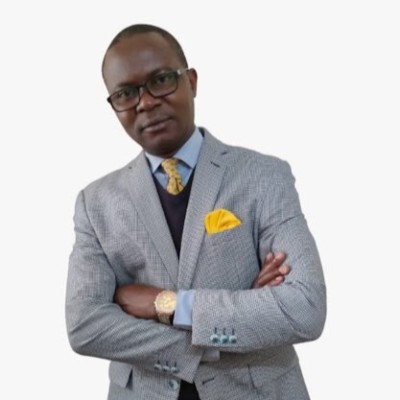
A lecturer in Molecular Cell Biology at the University of Nairobi, with a PhD in Medical Biotechnology from the University of Siena, whose research spans oncogenetics, lymphoma pathogenesis, and translational diagnostics.

A medical doctor with advanced training in Experimental & Translational Immunology from University College London, and clinical experience across cardiology, bone marrow transplantation, and multidisciplinary inpatient care.
Together, this team combines medical education, research, and clinical practice to deliver a registry that is both scientifically rigorous and deeply rooted in patient care.
Clinical staff at a participating site sign in with the account their administrator issued. Sites, researchers, and ministries interested in taking part, or in access to aggregated data, are welcome to get in touch.